
Many parents are surprised when a child needs a stronger pair of glasses only a year after the last exam. Childhood myopia often progresses while the eye is growing. A clearer prescription helps the child see today; myopia management aims to reduce the pace of future change. It cannot reverse established myopia, and results vary between children.
Why does progression matter?
Higher myopia is associated with greater lifetime risk of retinal detachment, myopic macular changes, glaucoma, and other eye problems. The absolute risk for any one child depends on many factors, but slowing progression can be worthwhile beyond avoiding thicker glasses. The earlier a meaningful trend is recognized, the more time there may be to manage it.
What should the first assessment include?
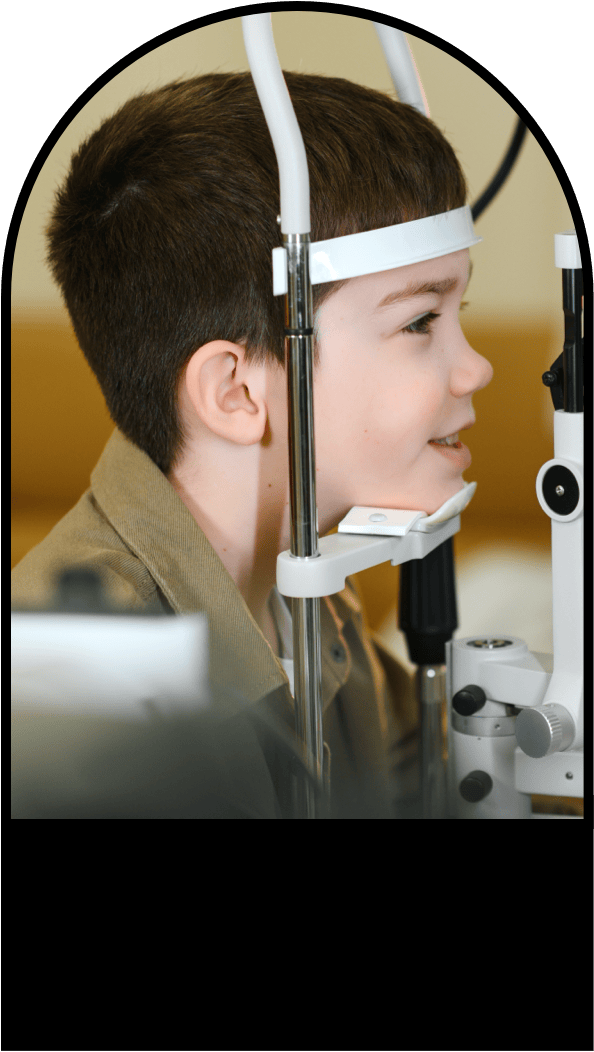
Your optometrist should review past prescriptions, age at onset, family history, visual habits, and eye health. Measuring the length of the eye, when available, can help track structural change alongside the glasses prescription. A single prescription difference may reflect measurement variation; a pattern over time is more informative. Ask for copies of prior prescriptions so the progression rate is easier to evaluate.
What are the options?
Depending on availability and suitability, options may include specialized spectacle lenses, daily disposable soft contact lenses designed for myopia control, orthokeratology lenses worn overnight, or low-dose atropine prescribed under a clinician’s supervision. Each has different routines, costs, benefits, and safety considerations. Contact lens hygiene and follow-up matter. No approach works identically for every child, and a combination should be chosen for clinical reasons rather than because it sounds more aggressive.
What can families do outside the exam room?
Encourage regular outdoor activity and breaks from prolonged near work. Keep reading materials at a comfortable distance with good lighting. These habits support visual comfort and may help with myopia risk, but they are not a substitute for a treatment plan once progression is documented. Avoid blaming a child for needing glasses or promising that stopping screens will undo myopia.
How long does treatment continue?
Myopia management is a process measured over years, not a one-visit procedure. Follow-up checks vision, lens fit or medication tolerance, and whether progression is slowing. Plans may change as the child grows, sports and school routines change, or new measurements become available. Ask the clinician what outcome is realistic and which number will be tracked at each visit.
Is my child old enough for contacts?
Age alone is not the only consideration. Maturity, hygiene, motivation, and a caregiver’s ability to support the routine matter. Some children handle daily lenses well, while another family may prefer glasses. Overnight corneal reshaping lenses require especially careful cleaning and prompt attention to pain or redness. An individualized discussion is more valuable than a blanket age rule.
Eye Sea Davis Optometry offers myopia management options in Davis. If the prescription has changed repeatedly, bring prior glasses and records to an evaluation. We can discuss the rate of change, explain the tradeoffs, and help you decide whether a control strategy fits your child.
Questions worth asking about a plan
How much change is too much? The answer depends on age, baseline prescription, and the measured trend. Ask the clinician to show the change over multiple visits and explain what they would consider meaningful progression for your child.
Does my child need a stronger prescription at every visit? The goal is clear, comfortable vision while tracking the underlying pattern. A new measurement can be affected by focusing or testing conditions, so the doctor may confirm findings before changing treatment.
Can treatment stop myopia completely? No option guarantees that. The realistic aim is to slow progression on average, while following the individual child’s response. If a method is not achieving the expected effect, follow-up gives an opportunity to adjust. Keep one folder with prescriptions and treatment dates. At future visits, that timeline makes it easier to interpret change. Encourage your child to speak honestly about comfort, sports, and handling lenses; a plan that works for the parent but not the wearer often fails in daily life.